Thinking about buying a Cape Cod home and renting it part of the year? You are not alone. The Cape is a seasonal market with strong summer demand, but rules and costs vary by town and can change your bottom line. In this guide, you will learn how to check permits and taxes, model peak-to-off-season revenue, and spot features that boost booking rates. Let’s dive in.
Start with the rules: taxes and registration
Before you estimate income, confirm what you can legally do with the home and what taxes apply.
- Massachusetts treats short-term rentals as taxable stays. The state Room Occupancy Excise is 5.7 percent and “rent” can include cleaning and booking fees if not refundable. Operators must register and file with the state. Review the state framework on the Room Occupancy Excise page.
- Barnstable County towns are part of the Cape Cod and Islands Water Protection Fund. This adds a 2.75 percent excise that applies across the Cape. See background from the county on the Water Protection Fund.
- Towns can add a local option excise up to 6 percent and some may adopt a community impact fee up to 3 percent for certain units. The total tax burden in many Cape towns often lands in the mid-teens percent before any impact fee. Confirm your town’s specifics.
- Registration is two-tiered. You register with the state and, in many towns, you also register or certify locally. Plan for compliance on both levels.
Town quick-check: what to verify
Use your town’s Health or Building pages to confirm:
- Whether a local short-term rental certificate is required and how often it renews.
- Inspection schedules and fees.
- Occupancy rules tied to legal bedroom count and septic capacity.
- Any community impact fee.
- How to display your state certificate number on listings.
Helpful examples:
- Review Barnstable’s short-term rental information.
- See Chatham’s short-term rental certificate requirements and bedroom capacity guidance.
- Check Eastham’s Rental Certificate Program that includes inspections and legacy caps.
- Explore Provincetown’s renter information for a comprehensive program overview.
Tip: Get your legal bedroom count from septic plans or building records. That number often drives how many guests you can host.
Understand Cape seasonality and supply
Cape Cod demand is highly seasonal. Peak weeks run June through August, with solid shoulder demand in late spring and September. Winter occupancy drops sharply. Research on coastal visitation supports this strong summer concentration, so always weight your model by season rather than by a single top week. See seasonality context in this Cape visitation study.
Recent reporting highlights very strong peak performance for short-term rentals compared with traditional lodging. One July snapshot showed STR occupancy around 86 percent with average daily rates near 552 dollars, versus hotels at about 71 percent occupancy and a 286 dollar ADR. Use that as a sense of upside, but build your annual plan across peak, shoulder, and off seasons. See the coverage citing market analytics in this Boston.com report.
Another factor is supply. Listing counts rose after 2019. More competition can compress shoulder and off-season results. When you underwrite a home, look at comps from the same village and size class and keep your expectations conservative in the non-summer months.
Build a conservative revenue model
Here is a simple, step-by-step way to size up a home’s rental potential before you make an offer.
1) Set seasonal buckets
Break the year into three buckets that reflect Cape demand:
- Peak: roughly June 1 to Aug 31 and key holiday weeks.
- Shoulder: May and September.
- Off: October through April.
You can refine this for local events in your town.
2) Gather village-level comps
Pull average daily rate and occupancy by month for similar homes in the same village. If you do not have access to platform analytics, ask two local managers for a comps memo with ADR, occupancy, and typical stay length.
3) Calculate gross revenue
For each season, use ADR multiplied by available nights multiplied by occupancy. Sum the three seasons to get a full-year gross estimate. Make sure your availability reflects any owner stays or winter blocks.
4) Back out the real costs
Short-term rentals have line items that are easy to overlook:
- Platform fees: many hosts pay about 3 percent on the default split-fee model. Learn how that works in this Airbnb host fee overview.
- Management: full-service local managers commonly charge around 20 to 35 percent of gross revenue. Hybrid or co-host setups are often lower, while white-glove service can be higher. See ranges in this management fee reference.
- Cleaning and linens: estimate cost per turnover and how often you turn based on average stay length.
- Utilities, internet, and consumables: budget these if owner-paid.
- Insurance: confirm that your policy permits STR use or add an endorsement. Coastal homes can carry higher premiums.
- Registration and inspection fees: town programs may require annual payments and inspections.
- Taxes: remember the state 5.7 percent excise plus the 2.75 percent Water Protection Fund, plus your town’s local excise and any impact fee. Guests usually pay these, but you should model the cash flow timing and filing requirements.
5) Reserve for capex and vacancy
Even well-run homes need periodic refreshes. Set aside 5 to 10 percent of gross for capital items and keep a vacancy reserve for weather, maintenance, or market soft spots.
6) Compare to price and financing
Use conservative net operating income to assess cash-on-cash return and coverage if you will carry a mortgage. Run three scenarios: pessimistic, middle, and optimistic.
A conservative example walk-through
Use this only as a framework. Always swap in live comps and quotes for the property you are considering.
Assumptions for a 3-bedroom near-beach cottage:
- Peak (June 1 to Aug 31 plus key holidays, 92 nights): ADR 500 dollars, occupancy 70 percent. Booked nights 64. Revenue 32,000 dollars.
- Shoulder (May and Sept, 61 nights): ADR 300 dollars, occupancy 35 percent. Booked nights 21. Revenue 6,300 dollars.
- Off (Oct to Apr, 212 nights): ADR 150 dollars, occupancy 10 percent. Booked nights 21. Revenue 3,150 dollars.
- Estimated gross annual revenue: about 41,450 dollars.
Illustrative deductions:
- Platform fee at 3 percent: about 1,244 dollars.
- Full-service management at 25 percent of gross: about 10,362 dollars.
- Cleaning: assume 18 turnovers at 150 dollars each, about 2,700 dollars.
- Utilities and internet: about 3,000 dollars per year.
- Insurance with STR endorsement: 2,000 to 4,000 dollars per year. Use 3,000 dollars here.
- Capex and reserves at 5 percent of gross: about 2,073 dollars.
Approximate net before property tax and mortgage: 41,450 minus the above equals about 19,018 dollars. Change any input and the outcome moves quickly. Run sensitivities for ADR, occupancy, and management fee.
Features that drive bookings on the Cape
Amenities and layout matter, especially for summer family travel. Look for:
- Proximity to beaches or water and clear distance noted in your listing.
- Parking for two or more cars, which is helpful for group travel.
- Accurate bedroom and bathroom count. The legal bedroom count ties back to septic and code in many towns and affects occupancy.
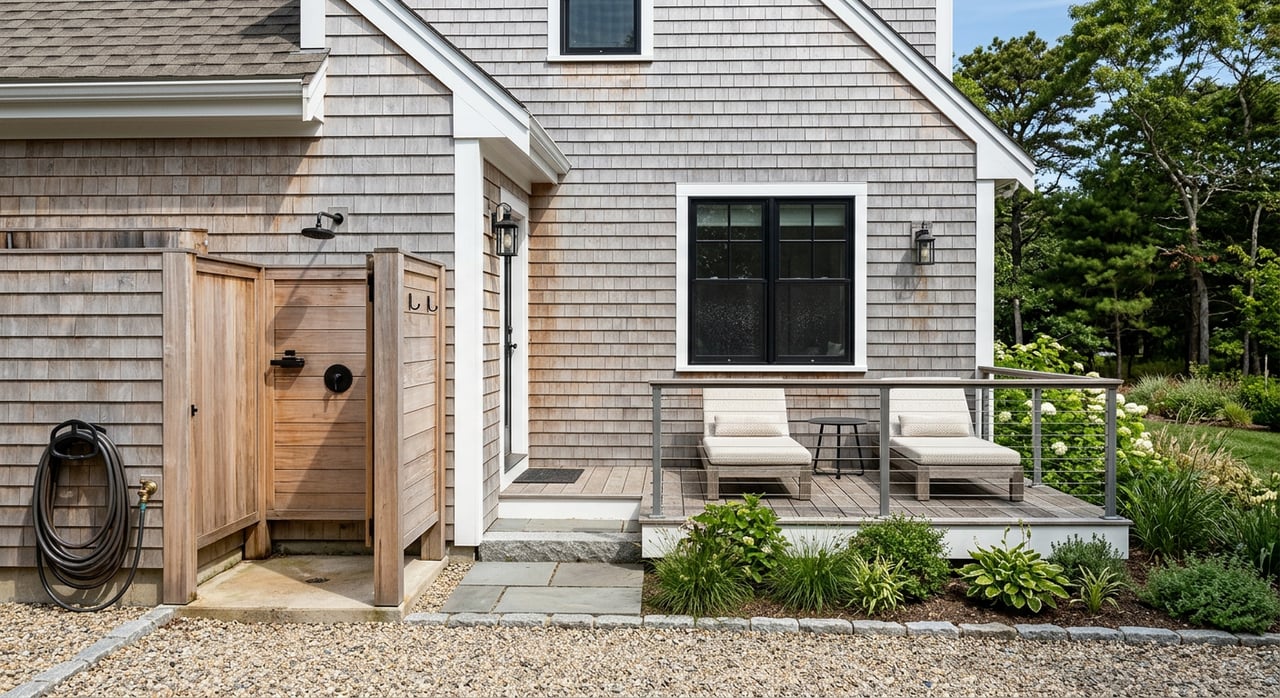
- Outdoor living like a deck, grill, and outdoor shower.
- Updated kitchen and baths with reliable HVAC and hot water.
- Strong Wi-Fi and a small workspace to extend shoulder-season demand.
Operational must-haves:
- A reliable local vendor network for cleaning and maintenance.
- A local emergency contact and clear house rules, including noise and parking.
- Documented safety items such as smoke and CO detectors and safe egress.
On-site and due diligence checklist
Use this when touring or preparing an offer.
Legal and zoning
- Confirm whether the town requires a rental certificate or inspection and what it costs.
- Verify legal bedroom count from septic or building records.
- Check for HOA, condo, or deed restrictions on rentals.
Tax and registration
- Register with the state and get your certificate before listing. The excise stack often totals around 14.45 percent in many Cape towns before any impact fee, made up of state 5.7 percent, local option up to 6 percent, and the 2.75 percent Water Protection Fund.
- If buying from an active host, request their DOR certificate and recent filings to understand process timing.
Operating and costs
- Ask for 12 to 24 months of booking performance or manager statements.
- Get quotes for insurance, cleaning, linen service, and lawn or pool care if applicable.
- Price out management options: DIY, hybrid, or full service.
Guest experience
- Note parking capacity, bed count, bathroom access, kitchen quality, and AC or heat.
- Check Wi-Fi speeds and coverage.
- Confirm safety equipment and railings, especially for decks and stairs.
Market comps and revenue
- Pull village-level comps for homes with a similar bedroom count and distance to the beach.
- Weight your model by season and by typical stay length. Many Cape bookings in peak season run weekly, which can reduce turnovers but also create gaps.
Exit and continuity
- If furnishings convey, obtain an inventory list and condition notes.
- If long-term rental or owner-only occupancy is a future option, model that scenario.
What to do next
- Pull your town’s STR rules and confirm certificate, inspection, and occupancy details.
- Request 12 to 24 months of booking data if the home has a rental history.
- Get quotes for insurance, cleaning, and management based on your planned availability.
- Build a conservative three-scenario model that covers peak, shoulder, and off-season.
If you want a second set of eyes on a property or help sourcing village-level comps, reach out. Keenan Flynn and the Ridgeback Team will give you a clear, data-informed plan and a seamless path from offer to first guest.
FAQs
What taxes apply to Cape Cod short-term rentals in Barnstable County?
- Massachusetts charges a 5.7 percent Room Occupancy Excise, Barnstable County adds a 2.75 percent Water Protection Fund excise, and towns can add up to 6 percent locally plus any community impact fee.
Do I have to register my Cape Cod rental with the state and my town?
- Yes. You register with Massachusetts through MassTaxConnect, and many towns also require a local rental certificate, inspections, and posting your registration number on listings.
How seasonal is Cape Cod rental demand, and how should I model it?
- Demand is strongest June through August, solid in May and September, and much lower in winter, so model peak, shoulder, and off-season separately with conservative off-season assumptions.
What are typical short-term rental management and platform fees on the Cape?
- Many hosts pay about 3 percent platform fees and 20 to 35 percent for full-service management, with hybrid options often lower depending on services.
Which home features most improve Cape Cod booking performance?
- Distance to the beach, parking, accurate bedroom and bath counts, outdoor living spaces, updated systems, and strong Wi-Fi tend to drive higher ADR and occupancy.
How can I quickly check a Barnstable County town’s rental requirements?
- Go to the town’s Health or Building pages and confirm certificate needs, inspection timing and fees, occupancy rules, any impact fees, and how to display your state certificate number on your listing.